PAMA in Gaza
PAMA in Gaza: Sustaining Life, Health, and Dignity
Gaza is facing one of the most severe humanitarian crises globally. Since October 2023, Gaza has faced a near-total collapse of its health system. Widespread destruction of infrastructure, repeated displacement, and prolonged access constraints rendered more than 60% of health facilities non-functional, while remaining services operated under severe shortages of staff, medications, fuel, and equipment.
Chronic disease management, particularly dialysis, oncology, and non-communicable diseases, was critically disrupted. Thousands of patients faced life-threatening interruptions in care, with limited or no access to referral pathways outside Gaza.
Our Response in Gaza
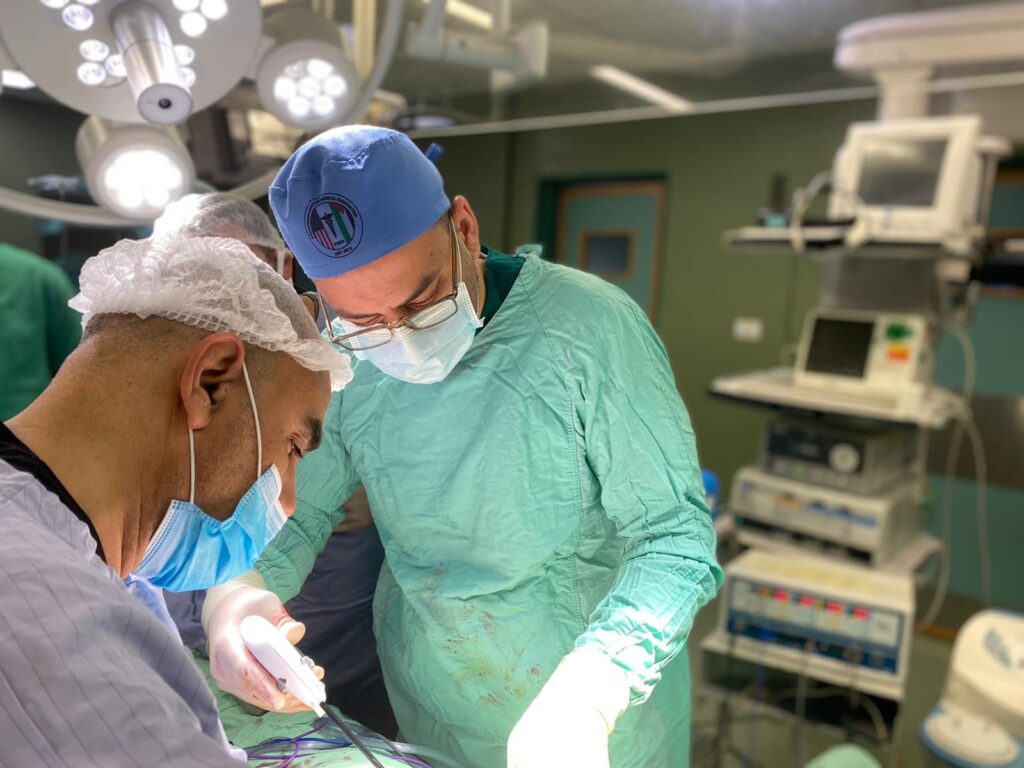
PAMA’s interventions in Gaza during 2025 focused on sustaining life-saving services while adapting to rapidly changing and highly constrained conditions.
Continuity of life-saving care
including dialysis, oncology, and emergency services
Frontline system support
through equipment, staffing, and hospital-level interventions
Innovative service delivery models,
including telemedicine to overcome access barriers
Rapid emergency response
recognizing that many interventions required immediate, one-time support rather than traditional program cycles
Strategic Significance
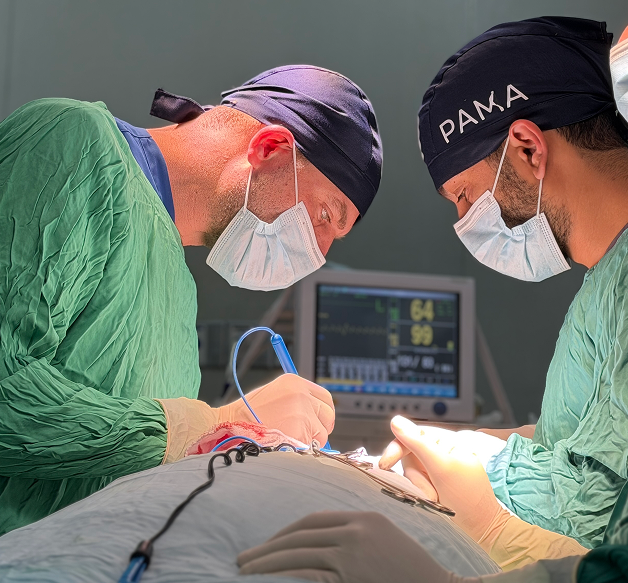
In one of the most complex humanitarian environments globally, PAMA’s Gaza response in 2025 was defined by scale, adaptability, and system relevance.
By combining emergency response with targeted system support, PAMA:
- Preserved essential services under extreme conditions
- Prevented avoidable mortality
- Maintained continuity of care for vulnerable populations
- Introduced scalable models such as telemedicine
- Laid early foundations for health system recovery
Programs in Gaza
Healthcare
Education
Livelihood
Gaza Strip Impact
Sustaining Life, Health, and Dignity
Total Beneficiaries: 65K+
Healthcare
14K+ beneficiaries
Education
3.4K+ beneficiaries
Livelihood
47K+ beneficiaries
Key health impact indicators (2025)
- 9 Hospitals supported directly
- 15 Primary Healthcare Centers (PHCs) and Medical Points (MPs)
- 2.7+ million Total Health Services
- 300,000+ Surgeries performed (major & minor)
- 149K+ Units of medications and medical supplies delivered
- 274 Healthcare staff deployed
- 14 Medical missions conducted
- 20 Emergency Medical Team (EMT) members deployed