Access to maternal and newborn health services in parts of the West Bank is increasingly affected by movement restrictions, checkpoint delays, and limited transportation options, which can make timely access to referral hospitals difficult for pregnant women, particularly during emergencies.
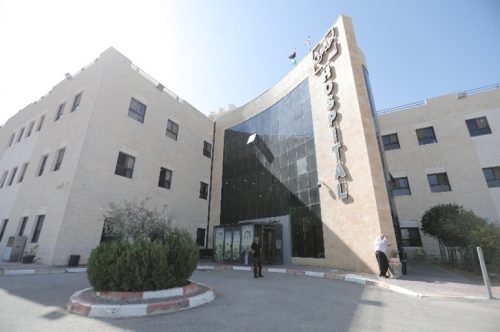
In Northern Hebron, Halhoul Hospital plays an important role in providing maternity services to surrounding communities. However, maintaining adequate staffing levels is critical to ensuring that the hospital can safely manage deliveries and obstetric emergencies locally. Strengthening local service capacity helps reduce the need for patients to travel long distances under restrictive movement conditions and eases pressure on referral hospitals across the region.
Key Interventions
The intervention focused on maintaining operational capacity within the hospital’s maternity services through the deployment and salary support for OB-GYN healthcare staff
| 24 | OB-GYN healthcare workers deployed |
Target Beneficiaries
The project primarily benefits pregnant women and newborns in Northern Hebron, particularly those living in communities facing movement restrictions and limited access to referral hospitals.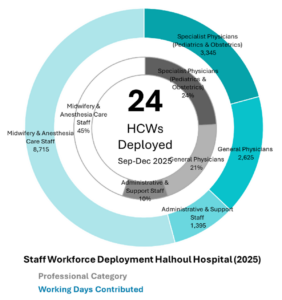
Indirect beneficiaries include:
- Families requiring safe and timely delivery services
- Healthcare workers supported through strengthened departmental staffing
- Referral hospitals whose workload is reduced when deliveries are safely managed at Halhoul Hospital
Service Delivery Impact
Following the implementation of the project, maternity services at Halhoul Hospital expanded significantly.
| 421 | Total deliveries |
| 118 (28%) | Cesarean sections |
| ~x3 | Increase in service utilization |
| 4 (1.0%) | Neonatal deaths (≤28 days) |
| 17 (4.0%) | Prematurity (<37 / <32 weeks) |
| 10 (2.4%) | Respiratory complications (intubation / CPAP / TTN) |
| 15 (3.6%) | Transfers to external NICU |