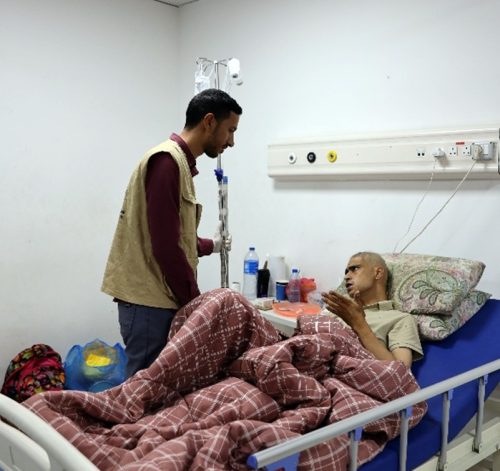
Cancer care in Gaza was already severely constrained before the war, with rising incidence rates and limited access to diagnostics, treatment, and specialized care. Cancer is the second leading cause of death in Gaza, with more than 2,000 new cases diagnosed annually and thousands of patients requiring ongoing treatment and follow-up.
Even prior to the current conflict, cancer services were fragmented and under-resourced, with shortages of oncology drugs, limited diagnostic capacity, and no availability of radiotherapy within Gaza. Many patients were forced to seek treatment outside Gaza, often facing significant delays or permit restrictions.
The war that began in October 2023 further devastated Gaza’s healthcare system. Numerous hospitals were damaged or forced out of service, medical supplies became scarce, and many specialized healthcare professionals were lost. These disruptions severely compromised cancer diagnosis and treatment pathways, leaving thousands of patients without access to essential care.
Initially, most oncology services in Gaza were centralized at the European Gaza Hospital (EGH) in Khan Younis, which served as the main facility providing chemotherapy and specialized oncology care for patients across the Gaza Strip. The hospital housed a dedicated oncology department with chemotherapy preparation capacity and diagnostic services, making it one of the few facilities capable of providing comprehensive cancer treatment in Gaza. However, some breast cancer–related diagnostic and interventional services remained available at Nasser Medical Complex.
On 14 May 2025, airstrikes and artillery shelling partially destroyed buildings near European Gaza Hospital, blocking access and forcing medical, technical, and administrative staff to evacuate due to security risks. Patients were transferred to other hospitals, and by 24 May 2025, health authorities announced the hospital’s complete closure. As a result, oncology services supported through this program were relocated to Nasser Medical Complex, which continues to serve as a key referral facility for cancer patients in Gaza.
Project 1: Strengthening Oncology and Hematology Services in Gaza
Initial Implementation Site: European Gaza Hospital (Khan Younis)
Current Implementation Site: Nasser Medical Complex
Objectives
The overall objective of this intervention is to strengthen access to comprehensive oncology services, improve cancer care pathways and outcomes for cancer patients in Gaza.
- Sustain oncology services through deployment of healthcare workers and operational support.
- Strengthen treatment capacity through provision of oncology medications, chemotherapy drugs, and medical disposables.
- Improve cancer diagnostics and specialized interventions through histopathology and interventional radiology equipment.
- Strengthen hospital operations through information systems, administrative support, and medical equipment for the Oncology and Hematology Department.
- Deploy specialized oncology medical missions to enhance clinical capacity and training for local healthcare workers.
Key Activities
- Medical Equipment and Departmental Support
The program supported the provision of medical equipment, furniture, and storage solutions for the hematology and oncology department to strengthen treatment capacity.
Medical monitoring and diagnostic equipment and furniture for oncology services were delivered to Gaza in December 2025, with some items still undergoing processing.
- Deployment of Healthcare Workers
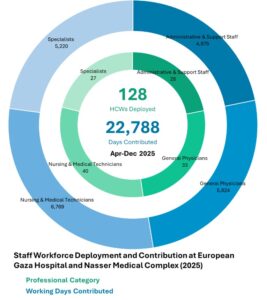
Healthcare workforce support was central to maintaining oncology services. The program deployed and supported healthcare workers across a range of oncology-related services, including clinical care, diagnostics, surgical oncology support, and laboratory services to sustain service delivery despite the challenging operating environment.
- 128 healthcare workers deployed
- 22,788 working days contributed
- Equipment and Supplies for Histopathology and Interventional Radiology
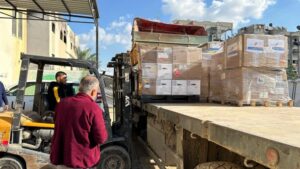
To strengthen cancer diagnosis and treatment planning, the program supported the provision of laboratory and pathology equipment and supplies. Most laboratory and pathology equipment were delivered to the Gaza Strip between November and December 2025, with the remaining equipment currently being processed.
- Oncology Medications and Medical Supplies
The program also supports the provision of essential oncology medications and medical supplies, including chemotherapy and supportive treatment drugs. Some medical supplies are currently awaiting coordination for entry into Gaza.
Project 2: Strengthening Breast Cancer Diagnosis and Treatment
Nasser Medical Complex – Gaza
The second intervention within PAMA’s Cancer Care Program supports the provision of specialized histopathology and interventional radiology equipment and supplies required for accurate diagnosis and treatment planning for breast cancer patients. These interventions aim to improve early detection, diagnosis, and treatment planning, which are critical to improving cancer survival outcomes.
- Equipment and Supplies for Histopathology and Interventional Radiology
Supplies and consumables for the breast cancer department were successfully delivered to Nasser Medical Complex in November 2025.
Most of the required medical equipment was delivered to Gaza in December 2025, strengthening the hospital’s capacity to perform diagnostic and interventional procedures for breast cancer patients.
Geographic Coverage
Both facilities serve patients from across the Gaza Strip, providing essential oncology services for a population facing severe barriers to treatment.
Target Beneficiaries
The primary beneficiaries of this programs are cancer patients in Gaza requiring diagnostic services, chemotherapy, and oncology care. The program aims to support approximately 12,000 existing cancer patients and respond to the needs of around 2,000 new cancer cases diagnosed annually.
Secondary Beneficiaries
- healthcare workers providing oncology services
- families of cancer patients
- the broader Gaza community benefiting from strengthened cancer care services
Service Delivery Impact
Despite constant disruptions caused by the conflict, the program supported a wide range of healthcare services during 2025. Oncology services accounted for more than half of all services delivered through the program, highlighting the critical role of this intervention in sustaining cancer care during the crisis.
| 488,035 | diagnostic tests (laboratory and radiology) |
| 918,918 | oncology inpatient services |
| 21,800 | outpatient clinic visits |
| 10,275 | histopathology examinations |
| 299,614 | surgical services |
| 297,670 | emergency services |