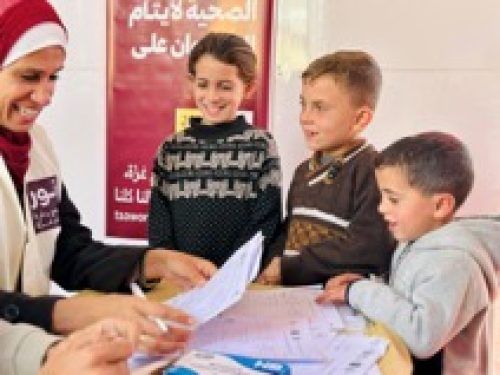
The ongoing war has deeply reshaped childhood in Gaza. Children represent nearly 47% of the population in the Gaza Strip, making them one of the largest demographic groups affected by the humanitarian crisis.
Since October 2023, Gaza’s children have faced an unprecedented humanitarian catastrophe. Thousands have been killed or injured, schools have been destroyed, and access to healthcare and essential services has collapsed. In this context, the number of children who have lost parents has surged dramatically.
Recent estimates indicate that 39,384 children in Gaza have lost one or both parents, with many living without adequate care, protection, or psychosocial support. These children often face displacement, food insecurity, interrupted education, and profound psychological trauma after losing family members and homes.
Many orphaned children are now living in temporary shelters, overcrowded displacement camps, or damaged homes, where access to basic services is extremely limited. The absence of stable caregiving environments, combined with ongoing conflict and economic collapse, places them at increased risk of:
- Malnutrition and untreated health conditions
- Severe psychological distress and trauma
- School dropout and long-term educational disruption
- Exploitation, neglect, and child labor
Within this environment, targeted interventions are essential to ensure that orphaned children receive the protection, healthcare, psychosocial support, and educational opportunities necessary to restore stability and dignity in their lives.
Target Beneficiaries
The program prioritizes the most vulnerable children affected by the Gaza crisis, including:
- Orphaned children under 18 years old
- Children who lost one or both parents during the conflict
- Children living in extreme poverty or displacement
- Children with disabilities or chronic health conditions
- Children requiring psychosocial support
Project Objectives
The goal of this project is to support pediatric cancer patients from Gaza receiving treatment in Jordan by addressing essential livelihood, psychosocial, and educational needs during extended medical care.
Key Activities
- Food Security and Basic Needs
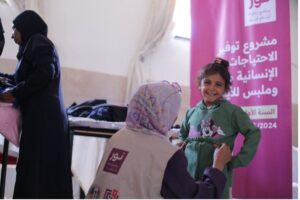
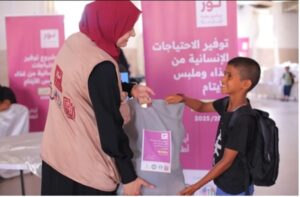
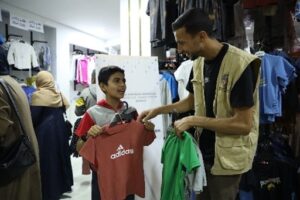
To address immediate survival needs, the program provided regular food assistance and essential clothing to orphaned children and their families, reducing hunger, improving nutritional intake, and preserving dignity during periods of extreme economic hardship. Key interventions included:
- 3,811 food parcels distributed
- 4,042 clothing sets distributed
- 923 children across 434 families supported
- Healthcare and Nutrition Support
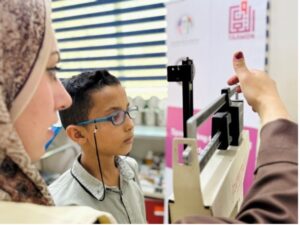
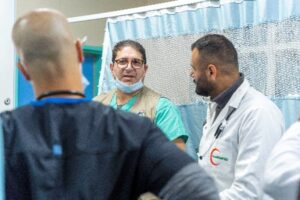
Comprehensive health screenings and follow-up care were provided to ensure early identification and treatment of medical and nutritional conditions affecting orphaned children. Key achievements include:
- 900 children received medical screenings
- 866 children received laboratory follow-up tests
- 644 children required medical, nutritional, or rehabilitation interventions
Health interventions included:
- Medical referrals and treatment for illnesses
- Nutritional treatment for malnutrition and anemia
- Provision of micronutrient supplements
- Distribution of assistive devices such as eyeglasses and hearing aids
Nutrition interventions resulted in measurable improvements:
- 31% of anemia cases fully cured
- 25% of malnourished children fully recovered
- Rehabilitation and Disability Support
Children with disabilities received specialized rehabilitation services and assistive devices to improve their mobility, communication, and independence. Services included:
- 689 physical therapy sessions
- 1,481 speech therapy sessions
- 27 Assistive devices including hearing aids, eyeglasses, and mobility aids
- Psychosocial Support and Child Protection
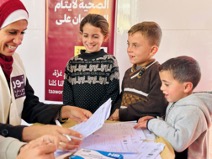
Psychosocial support was a central component of the program, addressing the severe emotional trauma experienced by children who lost family members during the conflict. Assessments revealed that 62.8% of orphaned children were experiencing significant psychological distress, highlighting the critical need for continued psychosocial interventions. Key activities included:
- 747 home visits providing psychological first aid (PFA)
- 379 children participated in counseling and therapy sessions
- 60 children received specialized psychological support
- 40 awareness sessions conducted for caregivers
- 20 art therapy sessions benefiting 200 children
- Education Support
Despite severe disruptions to education due to insecurity and displacement, the program helped children remain prepared to resume formal education when conditions allow maintain.
Key actions included:
- Distribution of 900 school bags and educational kits
- Support for kindergarten enrollment for children under five
- Preparatory educational support for future school re-entry
- Digital Case Management: Noor Portal
To ensure effective coordination and monitoring, the program utilized the Noor Portal, a centralized digital platform launched in November 2024. The system enables:
- Comprehensive case management for each orphan
- Integration of health, psychosocial, and education records
- Monitoring of service delivery and follow-up needs
- Coordination among partner organizations
Program Continuity
The Orphan Support Program is designed as a multi-year initiative responding to the long-term needs of vulnerable children in Gaza.
Following the successful implementation of the first year (2024–2025), the program is currently entering its second year, continuing to provide integrated humanitarian and protection services to orphaned children and their families.
Service Delivery Impact (2025)
The first year of the program achieved significant results despite operating in one of the most challenging humanitarian environments.
| 900 | orphaned children supported |
Food and Basic Needs
| 3,811 | food parcels distributed |
| 4,042 | clothing sets distributed |
Healthcare
| 900 | medical screenings |
| 866 | laboratory follow-ups |
| 644 | children received health or nutrition interventions |
Rehabilitation
| 689 | physical therapy sessions |
| 1,481 | speech therapy sessions |
Psychosocial Support
| 747 | home visits |
| 379 | children received counseling and PFA |
| 200 | children participated in art therapy |
Education
| 900 | children received educational kits |